Review - Master Armoury Sparring ShuangShouJian
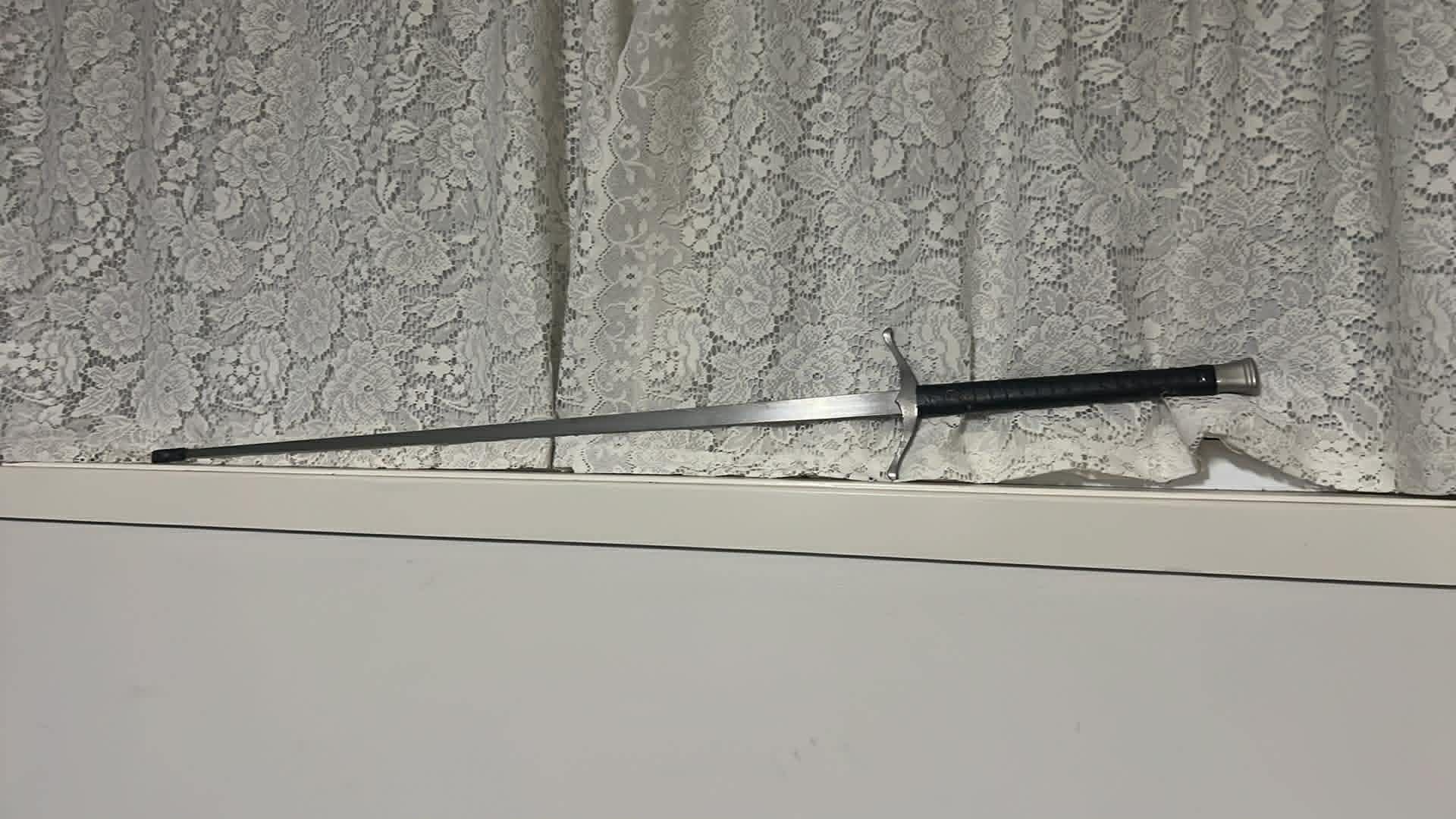
The Specs
- Overall length: 133cm
- Blade Length: 99.5cm (From rear of guard)
- PoB: 9.5cm (From rear of guard)
- Weight: 1270g
- Flex weight: 15.9kg
- Tipping: Rolled
Tl;dr A decent, but idiosyncratic entry level Shuangshoujian, which emphasises a very nimble style of play
Overall Rating: 3.7/5
This review was written with the assistance of my friend and student Patrick, who is the owner of the Master Armoury Sparring Shuangshoujian used in this review. We have both used it, but since he also had extensive use, gave additional feedback in how he used it during class. He also primarily trains with a HEMA club and focuses upon multiple two handed systems, so was able to put it through extensive training against other two handed weapons.
Balance and Handling:
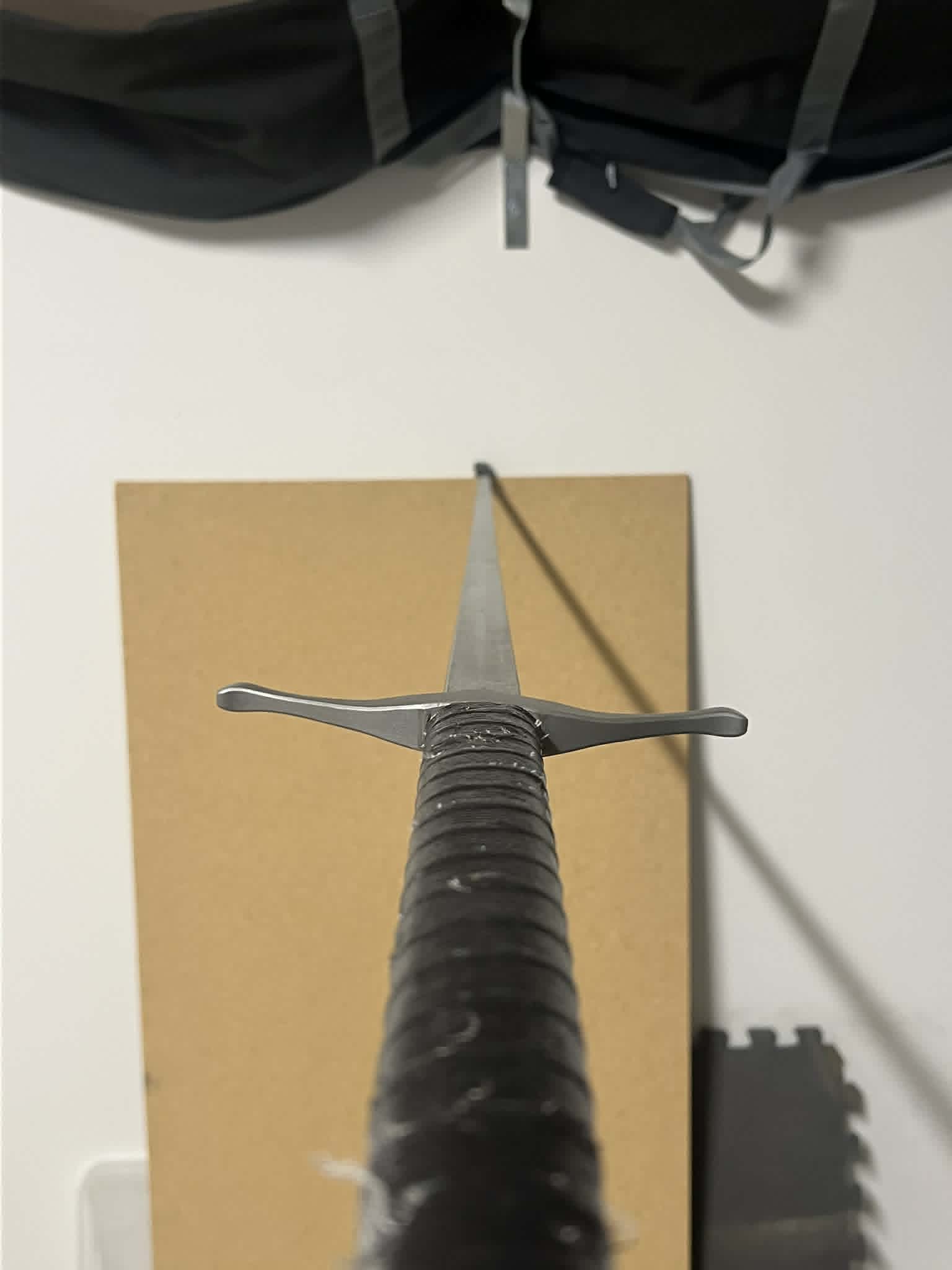
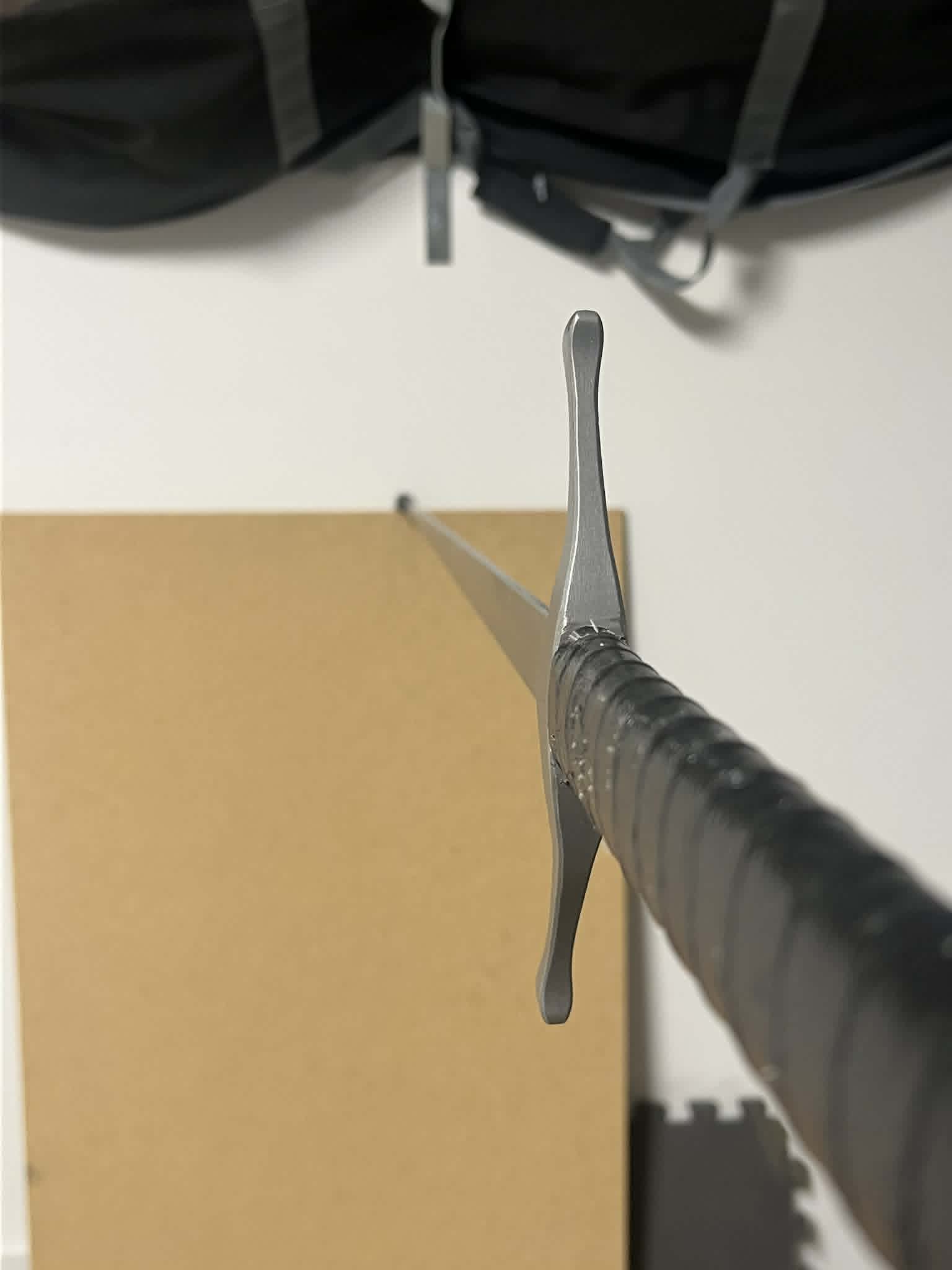
This is an interesting ShuangShouJian (SSJ), since it’s very quick and nimble, but lacking in blade presence. The tip feels a bit “floaty”, and likes to rotate a bit closer to the centre of percussion. In swinging it around in training, against the air, the blade feels fast, and flicks around quick easily and comfortably. The narrow grip is oval and is more like a HEMA longsword without the waisting in the middle toward the pommel. The crossguard is much larger than Chinese guards, even those that are crosgguard-like and the largest examples we have with the crescent guards from the Song dynasty weren’t this large. It does change the way you have to move the sword around, differently to how you can manipulate the blade alignment with a more Chinese guard. With the flattened pommel, it is easy to keep edge alignment with both hands.
The overall weight is 1270g, with a point of balance of 9.5cm from the handle side of the crossguard. With a 99.5cm blade and 133cm overall length it’s definitely a two handed shuangshoujian, and not easily used in one hand. The length is on par with western longswords for sparring, and falls within the range of historical norms, for multiple periods in Chinese history.
In general, the handling is idiosyncratic, and likely to be devisive. Some people will like it, some people will hate it.
B&H: 3.5/5
Construction:
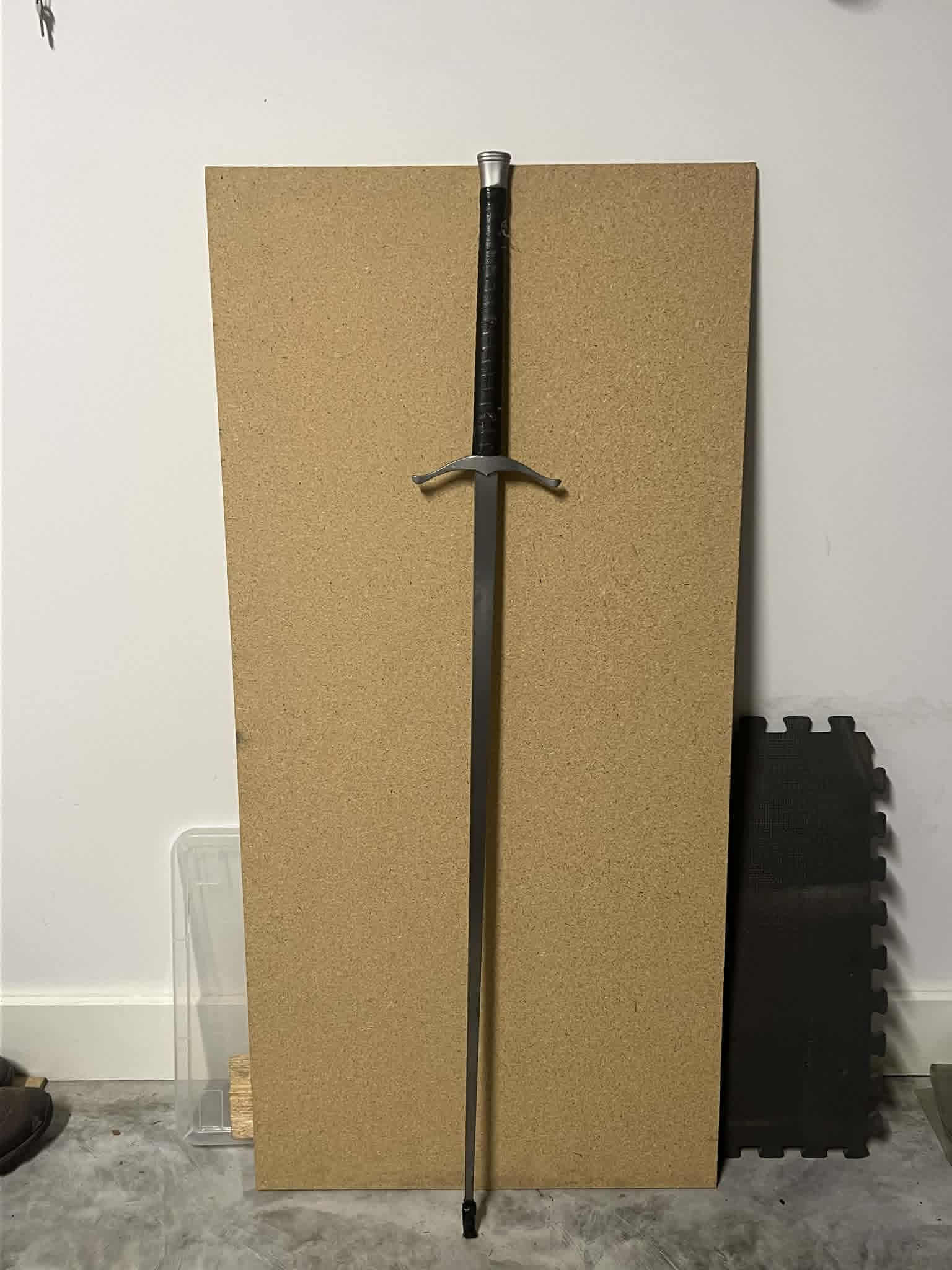
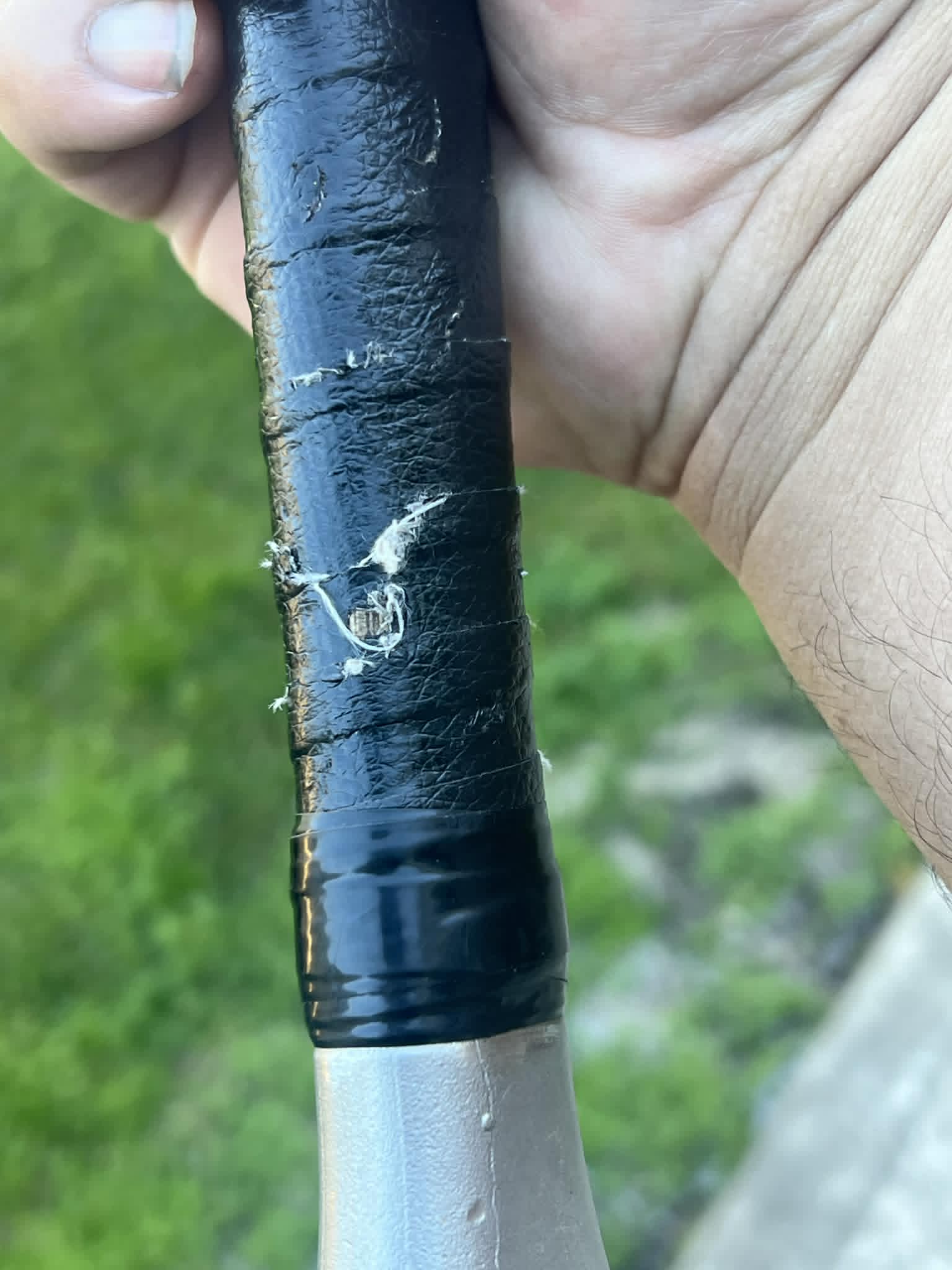
The fittings on this SSJ appear to be made of cast steel, and are tightly fit. The crossguard appears to be a non-historical crossguard that is shorter than the crossguard of a European longsword, likely to appeal to the HEMA crowd, without any of the advantages of a period Chinese guard (disc or otherwise). The grip is wrapped in what appears to be a synthetic leather, similar to the wrap on a tennis racquet. Which doesn’t appear to shift easily even under heavy use. The end-cap is fastened securely.
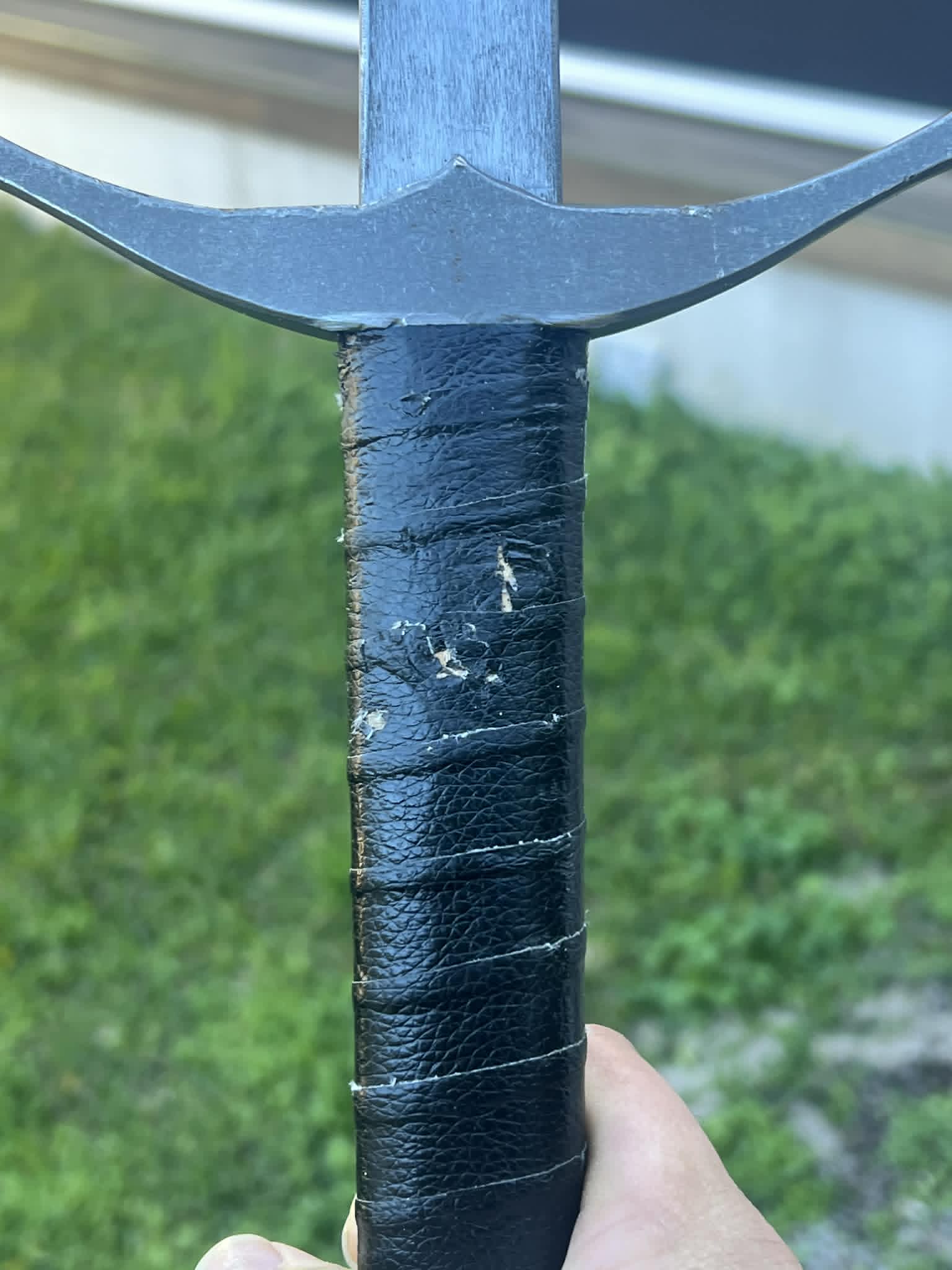
Over time, the wrap has received hits and taken more than typical damage to it. As a longer hilted weapon, impacts to the hilt are expected, but the damage over time is more than equivalent long swords receive, the durability isn’t the greatest in this area.
Construction: 3.5/5
Aesthetics:
This Shuangshoujian is a strange looking sword that doesn’t really fit with any historical designs. The crossguard is like they wanted to appeal to HEMA longsworders by having a crossguard, but without being an actual longsword.
Sparring Performance:
This shuangshoujian is difficult to properly estimate the direct effectiveness of, due to the particular way that it handles. The most common match up it will have outside of clubs where it is bought by most people will be HEMA style longswords of equivalent length. When facing off against a typical longsword that is used with heavy edge parries and bindings, the MA SSJ is easily pushed offline due to how light and thin the blade is, lacking in presence and inertia to resist.
On the other hand, the longer hilt gives more point control, and ability to yield when a heavier blade tries to bind it. Unless your structure is perfect, you need to yield away from a bind to either come around the either side or redirect your opponent, which is a feature in Chinese swordplay, however ideally is done via body mechanics rather than forced entirely by the blade profile.
Compared to most SSJ and longswords on the market, the MA SSJ is sightly shorter by a centimeter or two, that needs to be accounted for, and gives a slight disadvantage, but can be trained around with enough familiarity.
Sparring Rating: 3/5
Price:
This Shuangshoujian can be bought on Taobao for 1071 RMB/CNY (approximately $231 AUD/160 USD) plus shipping and taxes. Or for $225 USD from Akado Armory. At that price point, it’s on the cheaper end of anything in a similar length and weight, and is definitely a good starter option for a lot of clubs that would be looking to get basic training swords for shuangshoujian practice. It does come with a cheaper 821 CNY version with a more traditional disc guard, which would appeal to people wishing to spar with more Chinese style fittings, but does limit the amount of taolu practice one can do with it.
Price: 4.5/5
Overall Thoughts:
In general, this is a very idiosyncratic shuangshoujian that absolutely requires the user to use it the way it was designed to be used, and not try and force their own sense of what they want to do with it onto the sword. It demands active footwork, yielding body mechanics and good structure, preferring to dart in and out without trying to dominate and bind up the opponent’s blade, because it will by pushed around in a straight binding contest.
It feels like something designed around an idealised view of how Chinese swordplay and jianfa is meant to work, rather than trusting the user to have the body mechanics and experience to move a more realistic weighted SSJ around properly. That said, it can be used, and if being used in a club where most users have the same SSJ for an even match up it can be quite a good option, or if the user wishes to give themselves a handicap to further refine their skill in this particular way of sparring, it definitely has its place.